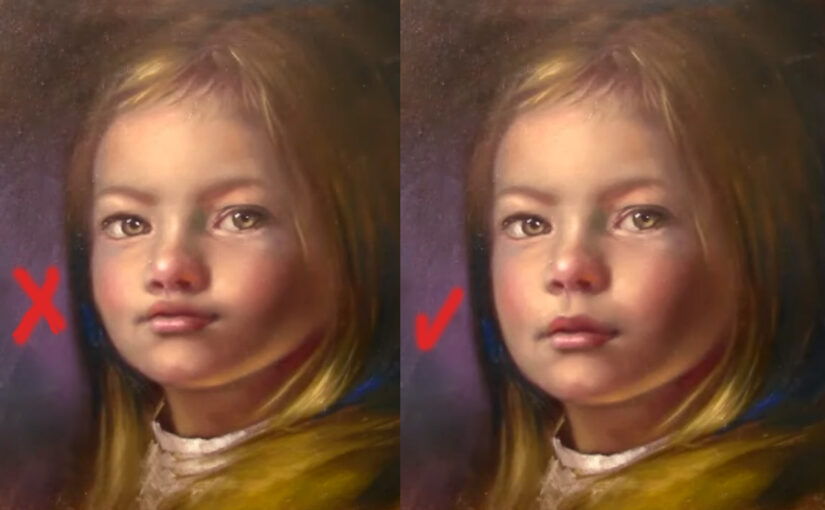
My E books could help you improve faster: https://www.rensoart.com/e-books-practical-tips-color-harmony/
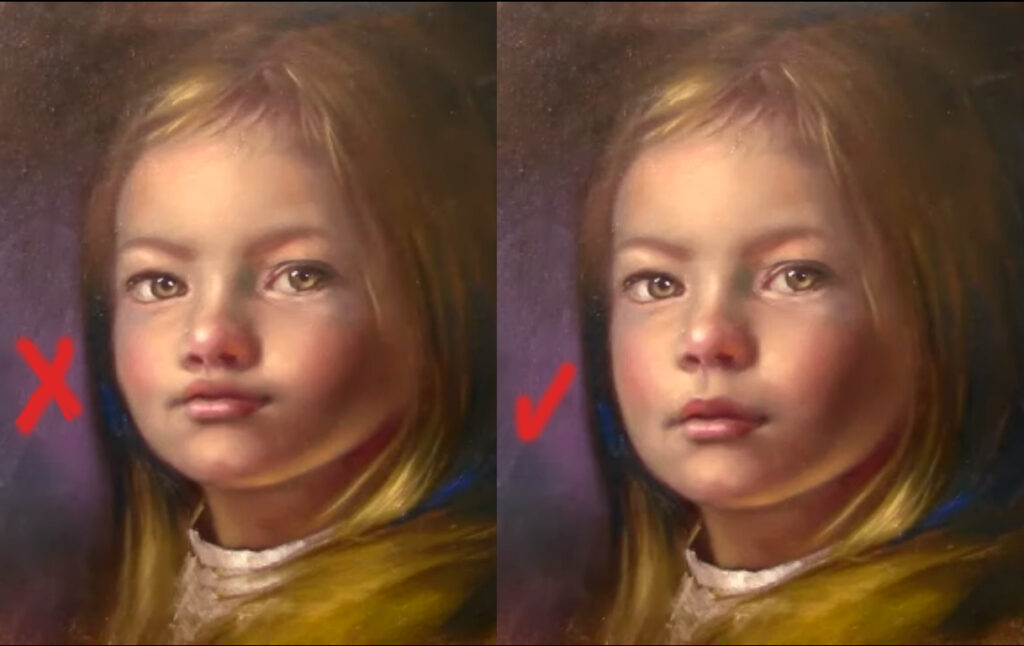
At some point, this happens to everyone.
You look at your painting and think:
“I can see what’s wrong… but I can’t fix it.”
That’s frustrating.
But it’s also a very good sign.
It means your eye is ahead of your hand.
And that’s exactly where you want to be.
What this actually means
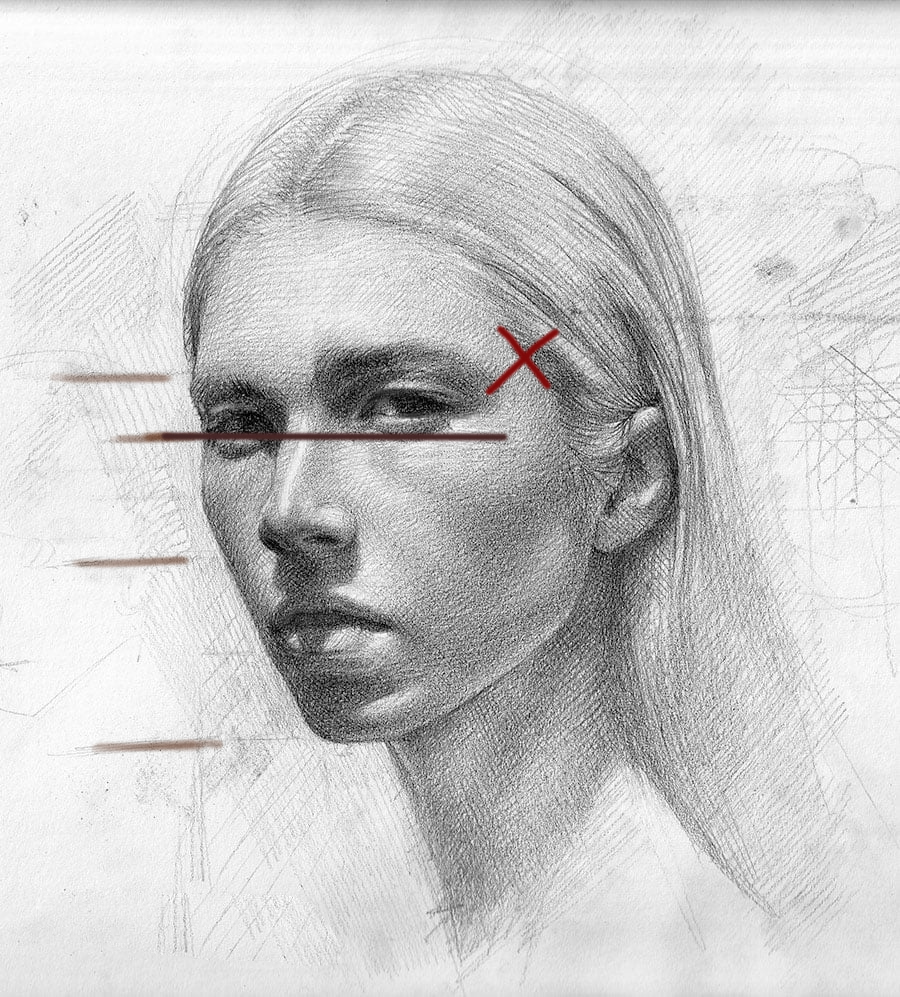
Your eye is your ability to see:
- proportions
- values
- shapes
- mistakes
Your hand is your ability to:
- draw accurately
- place shapes correctly
- control the brush
When you start, both are weak. You don’t see much, and you can’t do much.
Then something changes.
You start to notice more:
- “The eyes are too big”
- “The values are off”
- “This doesn’t feel solid”
But when you try to fix it… it doesn’t come out right.
That gap—between what you see and what you can do—is where learning happens.
Why this feels so frustrating
Because now you have taste.
You can recognize what looks good and what doesn’t.
So your brain says:
– “I know this is wrong. Why can’t I fix it?”
The problem is not understanding.
The problem is execution.
Your hand hasn’t caught up yet.
Most people make the wrong decision here
They think:
- “Maybe I’m not talented”
- “Maybe I need better materials”
- “Maybe I should copy more carefully”
No.
What you need is more mileage with intention.
Not more random practice.
What you should do instead
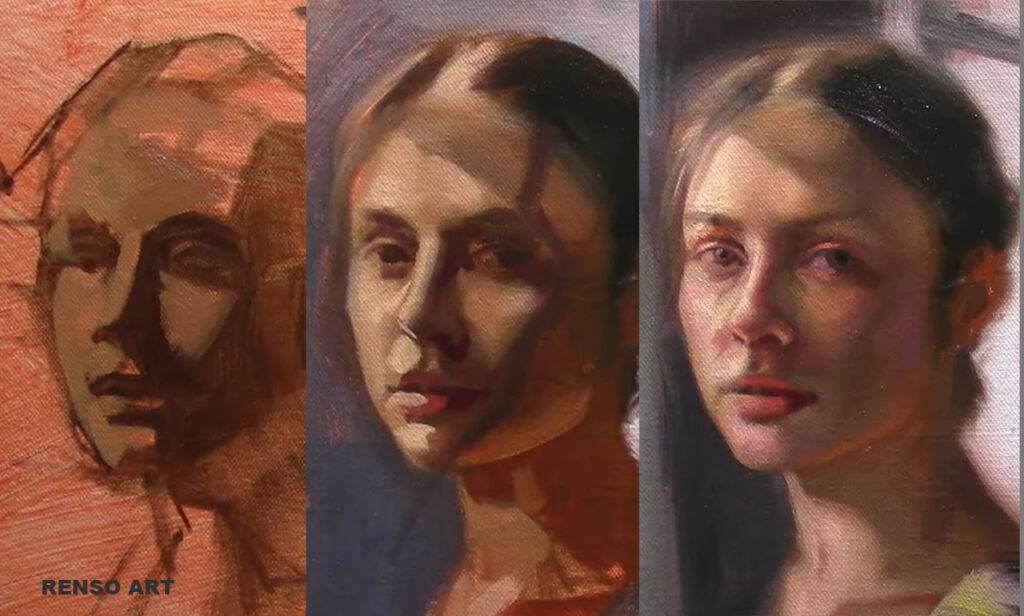
1. Slow down and simplify
If your hand can’t match what you see, it’s usually because you’re trying to do too much.
Go back to basics:
- big shapes
- simple values
- fewer details
If you can’t paint it simply, you don’t understand it yet.
2. Train your eye AND your hand together
Don’t separate them.
When you see a mistake, don’t just move on.
Ask:
- Where exactly is the problem?
- Is it proportion, value, or edge?
Then fix only that one thing.
This is how your hand learns.
3. Use smaller, controlled exercises
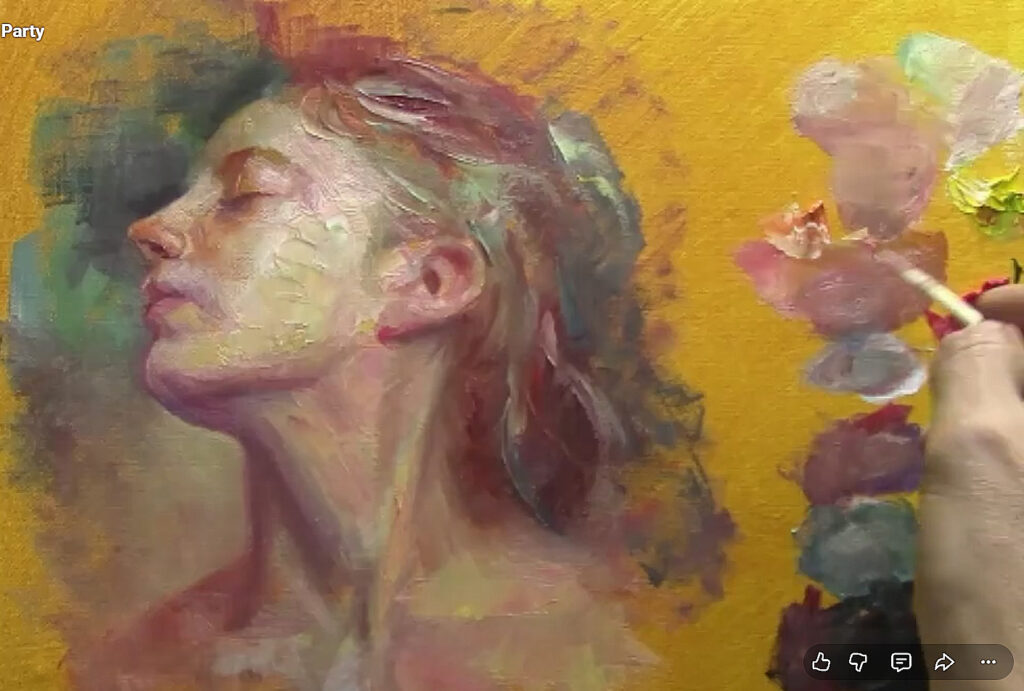
This is why I make students do things like:
- value studies
- limited palette paintings
- quick sketches
You’re not trying to make a masterpiece.
You’re trying to build control.
4. Accept the gap
This is important.
That gap between your eye and your hand will always exist—just at different levels.
Even advanced painters feel it.
The difference is:
– they don’t panic when it happens.
They know it’s part of the process.
A simple way to think about it
Your eye is the teacher.
Your hand is the student.
Right now, your teacher is getting better faster than your student.
That’s not a problem.
That’s progress.
What this means for your next session
Instead of trying to make a perfect painting, do this:
- Pick one thing to improve (values, proportions, edges)
- Keep the painting simple
- Focus on correcting mistakes, not hiding them
That’s how the hand catches up.
Final thought
If you can see your mistakes, you’re already ahead of where you were before.
Now your job is simple:
– Keep practicing
– Keep correcting
– Keep it simple
Your hand will catch up.
It always does.
My E books could help you improve faster: https://www.rensoart.com/e-books-practical-tips-color-harmony/