Most people think they need hours to improve.
You don’t. You need better attention, not more time.
If you can train your eye for 10 minutes a day, you will improve faster than someone painting randomly for hours.
Let me show you how.
First: what does “training your eye” mean?
It means learning to see clearly:
- shapes instead of “things”
- values instead of “colors”
- angles instead of “features”
When your eye improves, your painting improves—even if your hand stays the same for a while.
The mistake most people make
They jump straight into a full painting.
Too complex. Too many decisions.
So nothing really improves.
If you only have 10 minutes, don’t paint a portrait.
Train one skill.
The 10-minute routine
Do this once a day. Keep it simple.
Minute 1–2: Observe (no painting yet)
Look at your reference.
Ask yourself:
- Where is the darkest value?
- Where is the lightest?
- What is the biggest shape?
Don’t touch the pencil or brush yet.
Most people skip this—and that’s why they struggle.
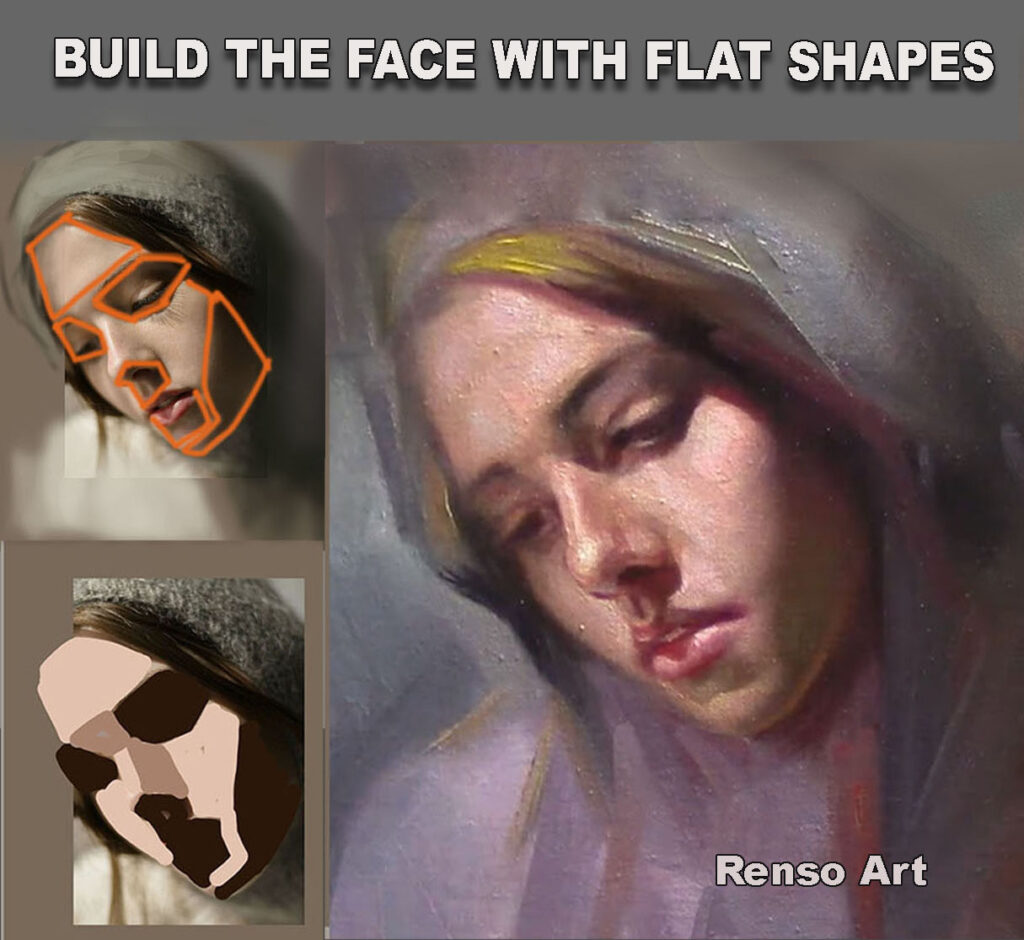
Minute 3–6: Block in big shapes
Forget details.
Draw only:
- the big shadow shape
- the big light shape
Think in 2 values only: light vs dark.
If you get this right, everything else becomes easier.
Minute 7–9: Check and correct
Now compare your drawing to the reference.
Ask:
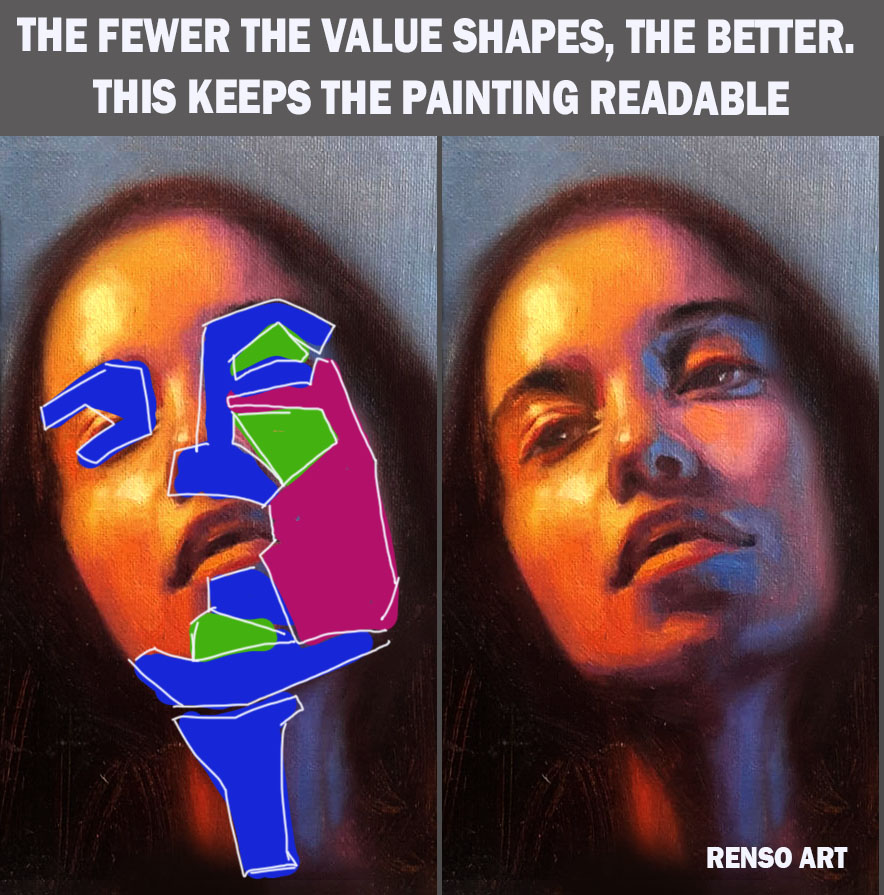
- Are my angles correct?
- Are my shapes too big or too small?
- Did I simplify enough?
Fix it.
This is where the learning happens.
Minute 10: Stop
Yes—stop.
Don’t keep going.
The goal is not to finish a drawing.
The goal is to train your eye.
What to use for this
Keep it simple:
- pencil or pen
- small paper
- any reference (photo, portrait, still life)
You can even repeat the same reference for a few days.
You’ll start seeing more each time.
A powerful variation (do this 2–3 times a week)
Use a limited palette mentally or in paint.
For example, think in terms of the Zorn palette:
- light warm
- light cool
- dark warm
- dark cool
This forces your eye to simplify color into relationships.
That’s what painters actually do.
Why this works
Because you’re isolating the skill.
Instead of:
“I’m trying to paint everything”
You’re doing:
“I’m training my eye to see clearly”
Small, focused practice beats long, unfocused sessions.
Every time.
What you should expect
At first:
- your shapes will be off
- your values will be wrong
- it will feel slow
That’s normal.
After a few days:
- you start noticing mistakes faster
After a few weeks:
- your paintings become simpler and stronger
Not perfect. Stronger.
If you only remember one thing
Don’t try to make a good drawing.
Try to see better.
That’s the real skill.
For your next session
Set a timer for 10 minutes and do this:
- Observe
- Block big shapes
- Correct
Then stop.
Do it again tomorrow.
If you do this consistently, your eye will improve.
And once your eye improves, everything else follows.
Thankyou Renso
I realize now the improvement.
I hope to continue , I feel more relaxed too.
Wren
Wow! You really got down to the basics. This is exactly what I need.
Thanks Renso … Great advice!
Very good explanation, thank you Renso. Hopefully I will do this regularly